Laminate Flooring Installation in Nashua, NH
Subfloor prep, underlayment and trim done right, for homes in Nashua and nearby towns.
A New Laminate Floor, Installed to Last
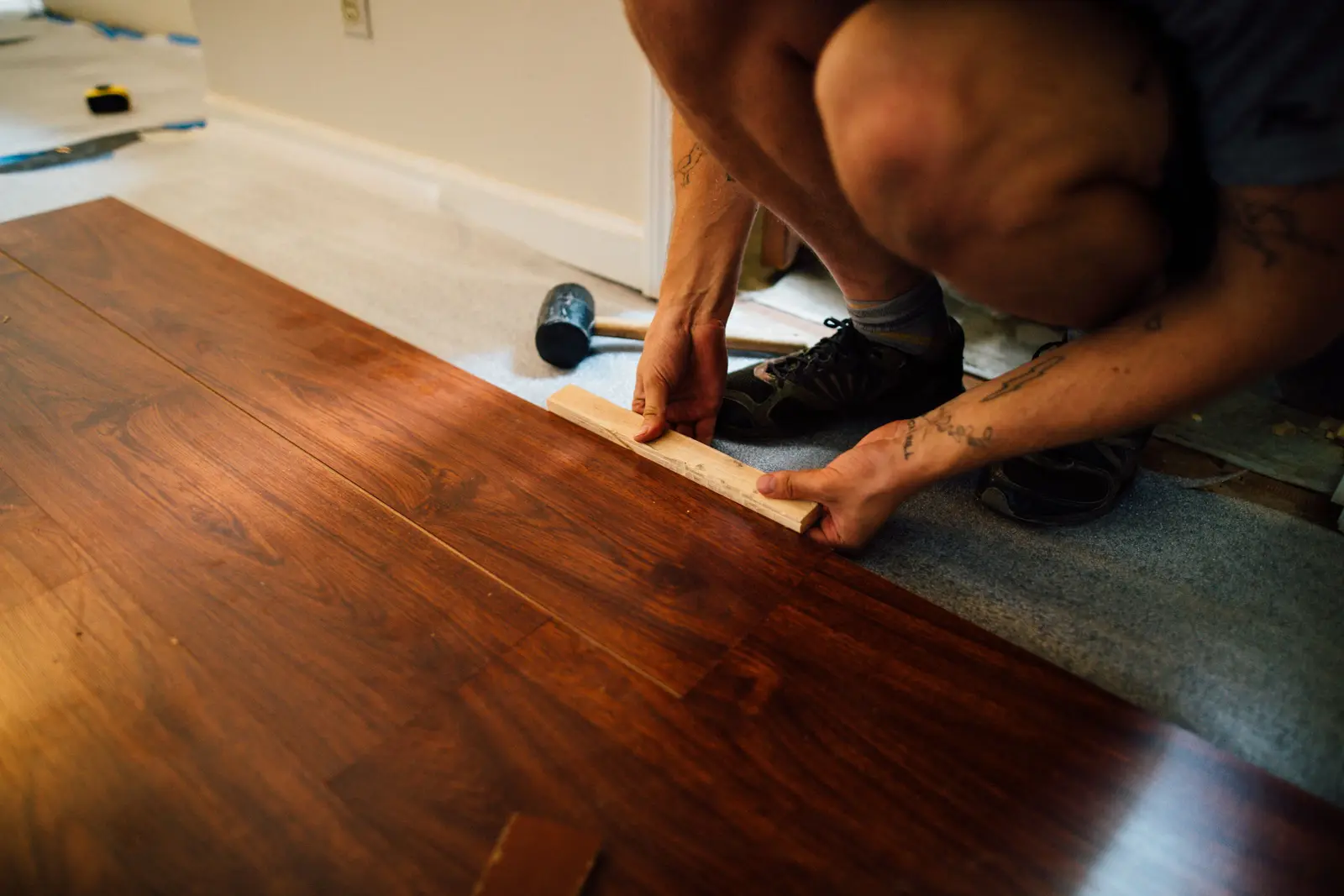
Laminate flooring is a floating floor: tongue-and-groove planks that click together over an underlayment and are never nailed or glued to the subfloor. It looks like wood, resists scratches well and goes down fast compared with other floors, which is why it is a go-to for replacing worn carpet or an old kitchen vinyl.
Nashua homes give laminate installers a mix of conditions. Mid-century and later split-levels and ranches often have finished lower levels on or near concrete, where moisture control comes first. Older houses can have floors that have settled and are no longer flat, which has to be addressed before planks go down or the seams will flex and wear.
Then there is the climate. Dry heated air in winter and humid summers make flooring expand and contract, so a proper installation leaves a small expansion gap at the walls and hides it under trim.
When to Replace Your Floor
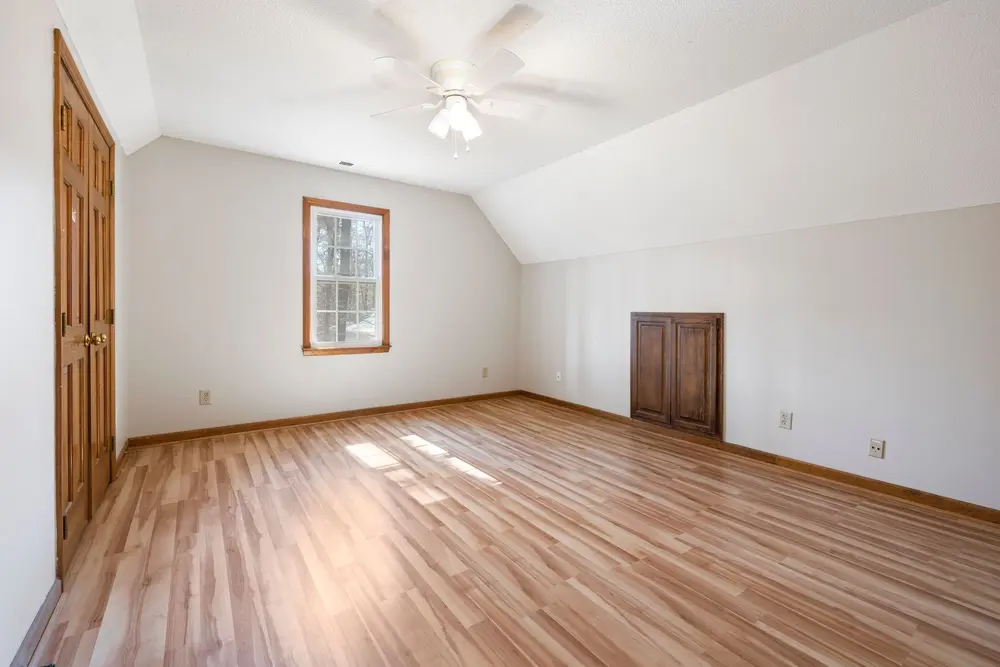
- Carpet that is stained, matted or worn through at the traffic paths
- Vinyl that is cracked, curling or discolored
- Finished floors scratched or dulled beyond what cleaning can fix
- A renovation, repaint or move that makes the old floor stand out
- Pets or kids that have simply worn the room out
If you see soft spots, a musty smell or signs of water under the floor, get that investigated first. New flooring should never go over a moisture problem.
Our Laminate Installation Process
Measure and plan the layout
We measure the rooms, decide which direction the planks should run and plan where transitions will sit.
Prepare the subfloor
Old flooring comes up, the subfloor is checked for flatness and moisture, and low or rough spots are dealt with.
Acclimate the planks
The planks sit in the room for the time the manufacturer specifies before any installation begins.
Lay underlayment and the first rows
Underlayment goes down, then the first rows start straight with a gap left at the walls.
Click, cut and fit
Planks are locked together row by row and cut around doorways, vents and corners.
Finish the edges
Trim and transitions go on, covering the gaps, and the room is cleaned up.
What Affects the Cost of Laminate Installation
- Square footage and layout: more rooms and more cuts mean more time, even at the same total area.
- The plank you choose: wear rating, thickness and finish all affect material cost.
- Underlayment: standard, sound-dampening and moisture-barrier options differ in price.
- Removing old flooring: carpet, glued vinyl and tile are very different amounts of work to take up.
- Subfloor condition: leveling, patching or moisture mitigation add to the job.
- Stairs, closets and odd angles: lots of small cuts cost more than open floor.
- Trim and transitions: baseboards, quarter-round and thresholds are part of the finished look.
Your free quote is based on measuring your actual rooms, not a per-square-foot guess.
Why Choose JJF Maintenance for Laminate Flooring
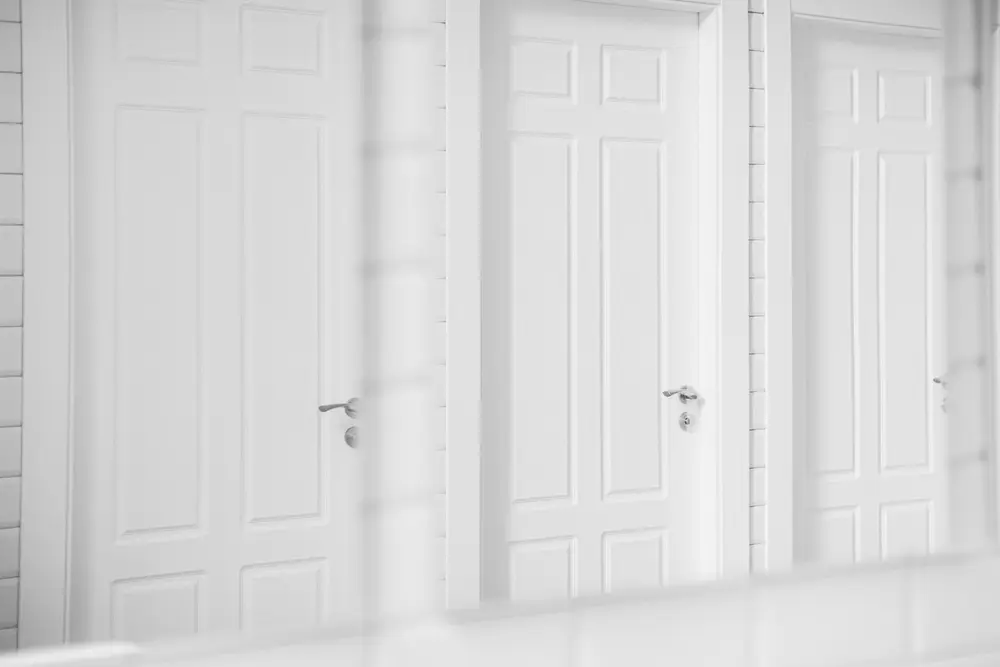
A floor job affects the walls and doors around it. Baseboards may need removal and refitting, doors may need trimming for the higher floor, and walls may be easier to paint before the floor goes in. JJF Maintenance also handles interior painting and door replacement, so those pieces fit together.
We install laminate in Nashua and nearby towns, including Salem, where many mid-century and later homes have finished lower levels that suit it.
Laminate Flooring FAQs
Can laminate flooring go in a basement?
Only in a basement that stays dry. Concrete slabs can pass moisture up into the floor, and laminate swells when it gets damp. A moisture barrier or vapor-control underlayment helps, but a basement that floods or stays clammy is a poor fit. Tell us about the room when you request a quote so we can flag any moisture risk.
How long do the planks need to sit in the house before installation?
Many manufacturers call for the boxes to sit in the room for about 48 hours so the planks adjust to the home's temperature and humidity, but the instructions for your specific product take priority. Skipping this step is a common reason for gaps and buckling later.
Do I need underlayment under laminate?
Almost always. Underlayment cushions the planks, smooths tiny subfloor flaws and often adds sound dampening and a moisture barrier. Some laminate comes with underlayment attached, in which case a separate layer may not be needed. The product's instructions decide.
Can laminate go over my existing floor?
Over a flat, hard, firmly attached surface such as sound vinyl, often yes. Never over carpet and padding, and not over a floor that is uneven or damaged. Those usually come up first so the new floor sits on something solid.
How soon can I walk on and furnish a new laminate floor?
Click-together floating floors need no glue or cure time, so foot traffic is generally fine right away. Some manufacturers recommend waiting a day before moving heavy furniture back. Felt pads under furniture legs protect the surface long term.
Why does new flooring sometimes make doors drag?
A new floor and its underlayment sit higher than what they replaced, reducing the clearance under a door. The fix is trimming the door bottom or replacing the door, which is one reason floor and door work are worth planning together.
Get Your Laminate Flooring Quote
Tell us about the rooms and we will put a free quote together.